

You already know what happens to diesel in the cold. Wax forms in the fuel, the filter clogs, and the engine loses power or stops. An anti-gel is the common answer, but bottles on the shelf make similar claims, and you need to know which one deserves your money.
I read product directions, treat rates, formula details, and guarantee terms closely, and I compare them against what drivers and fleet managers need in winter. For this review, I looked at Howes Diesel Treat and asked five questions. Does it prevent gelling? Does it handle water the right way? Is it easy to dose? Is it safe for modern engines? Does the company stand behind it?
Below, I share what I found, where the product fits, and where you need a different tool.
What Diesel Treat Is Built to Do
Howes calls Diesel Treat the number one trusted anti-gel and fuel conditioner in North America. It is made to keep diesel from gelling in the coldest climates, and it also deals with problems linked to Ultra Low Sulfur Diesel.
That second part matters. ULSD has less natural lubricity than older diesel, and your injectors and pumps feel it. According to Howes, Diesel Treat adds lubricity to injectors, pumps, and upper cylinders.
Here is what the formula is designed to do:
- Prevent fuel from gelling in low temperatures
- Reduce cold filter plugging
- Add lubricity to injectors, pumps, and upper cylinders
- Help prevent injector deposits with a detergent package
- Help reduce smoking and rough idle
- Remove water from the fuel
One product covers cold weather protection and fuel care, and that is a good reason to consider it.
How It Handles Water
This is where I think Diesel Treat stands apart from many competitors.
Some anti-gel products mix water into the fuel so it burns through the engine. Howes takes a different path. The petroleum-based formula demulsifies water and pushes it out of the fuel, and your water separator then removes it. Howes notes that major diesel engine manufacturers prefer this method.
I agree with the logic. Water in a fuel system causes rust, filter trouble, and a place for microbes to grow. Taking water out of the fuel makes more sense than hiding it inside the fuel.
The formula also contains no alcohol or harmful solvents, which is a point worth checking on any label you read.
Engine and Filter Safety
If your truck is new, you should ask about warranty and emissions equipment before you pour anything into the tank.
Howes describes Diesel Treat as warranty safe and particulate filter friendly. It works in all diesel and biodiesel blends, and it works in home heating oil. That makes one bottle useful for road trucks, farm equipment, and a heating tank at home.
Treat Rates and Sizes
Dosing is simple, and that counts for a lot on a cold morning. For the smaller bottles, Howes lists these rates:
1. Above 0°F, use 1 ounce for every 5 gallons of fuel.
2. Below 0°F, use 1 ounce for every 2.5 gallons of fuel.
3. For cars, pickups, and tractors, use a double dose.
Howes states that overtreating with their diesel products is not harmful. If you are unsure about the math, adding a little extra will not hurt your engine.
The product comes in 15 ounce, 1 quart, and half-gallon bottles. Large operations can buy 55 gallon drums and 275 gallon totes. For bulk and inground storage, Howes makes Diesel Treat Concentrate, which uses a wax crystal modifier. It changes the size and shape of wax crystals so they cannot bind together and gel. The ratio can be as strong as 1 gallon per 3,000 gallons above 0°F.
What an Anti-Gel Cannot Do
I want you to understand this limit, because it applies to every anti-gel on the market.
An anti-gel prevents gelling. It cannot reverse gelling after the fuel has reached its cloud point. If your fuel has already turned to gel, you need a rescue product.
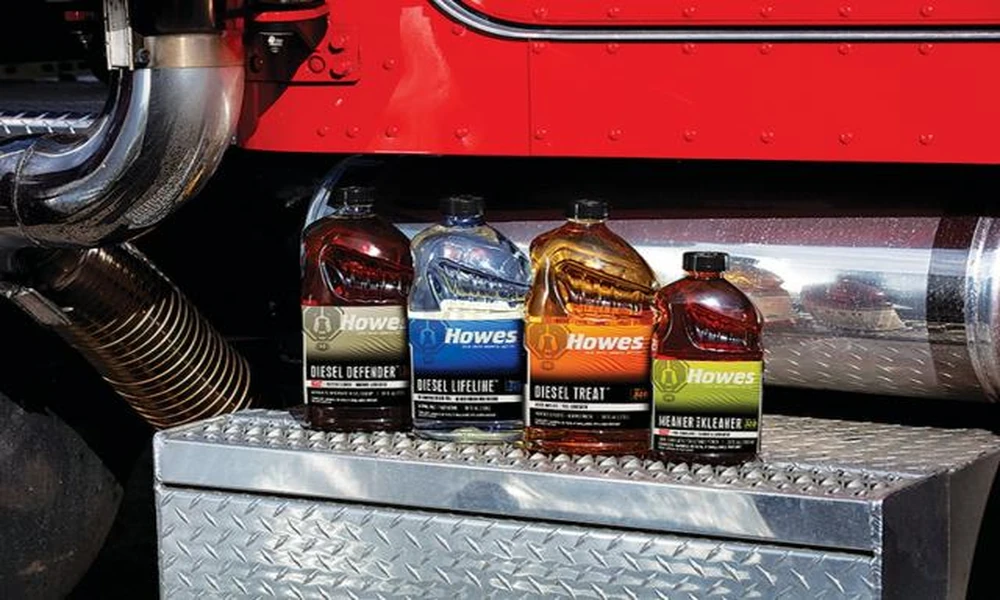
Howes makes one called Diesel Lifeline. It changes the melting points of wax and ice crystals so frozen diesel can flow again. The company says it can work in about 15 minutes and is proven in temperatures down to -35°F and below. It needs no pre-mixing with diesel, and it contains no alcohol or harmful solvents.
Howes recommends keeping a bottle in the cab or toolbox. This is good advice for diesel pickups and tractors, since smaller filters gel more easily even in treated fuel.
The Guarantees
A company shows its confidence through its promises. Howes backs Diesel Treat with a Winter Tow Guarantee. If a truck treated with the product fails to keep going in winter, Howes will pay for the tow. They describe it as the first free guarantee of its kind.
Every Howes product also carries a 100 percent satisfaction guarantee. You mail in the original receipt to get a full refund.
I like these terms because they lower your risk. You can try the product and know what happens if it fails.
Why I Recommend Howes Over Other Options
Howes is a fifth-generation, family-owned company in North Kingstown, Rhode Island. Their roots go back to 1920, and they say every product is tested in the lab and in the field before release. Their motto is “Tested. Trusted. Guaranteed.”
Here is what sets them apart for me:
- A water removal method that engine makers prefer
- Clear treat rates with a safe margin for overtreating
- A matching rescue product for gelled fuel
- Bulk options for farms and fleets
- A tow guarantee and a satisfaction guarantee
- Free educational resources on gel temperatures and diesel algae
Their other products fit with Diesel Treat, since they are designed to work together. Diesel Defender adds lubricity and cleans injectors, and it can be used in any season. Meaner Power Kleaner is a one-tank deep clean for engines with an unknown maintenance history.
Final Verdict
Does Diesel Treat really work? Based on the formula, the dosing rules, and the guarantees, I believe it does what an anti-gel should do when you use it before the fuel gels. It prevents wax buildup, adds lubricity, and removes water in a way that protects your system.
My advice is to add it to the tank before temperatures fall, use the double dose if you drive a pickup or run a tractor, and keep a bottle of Lifeline nearby as a backup. That plan covers the most common winter fuel problems and gives you a clear way to act if one shows up.